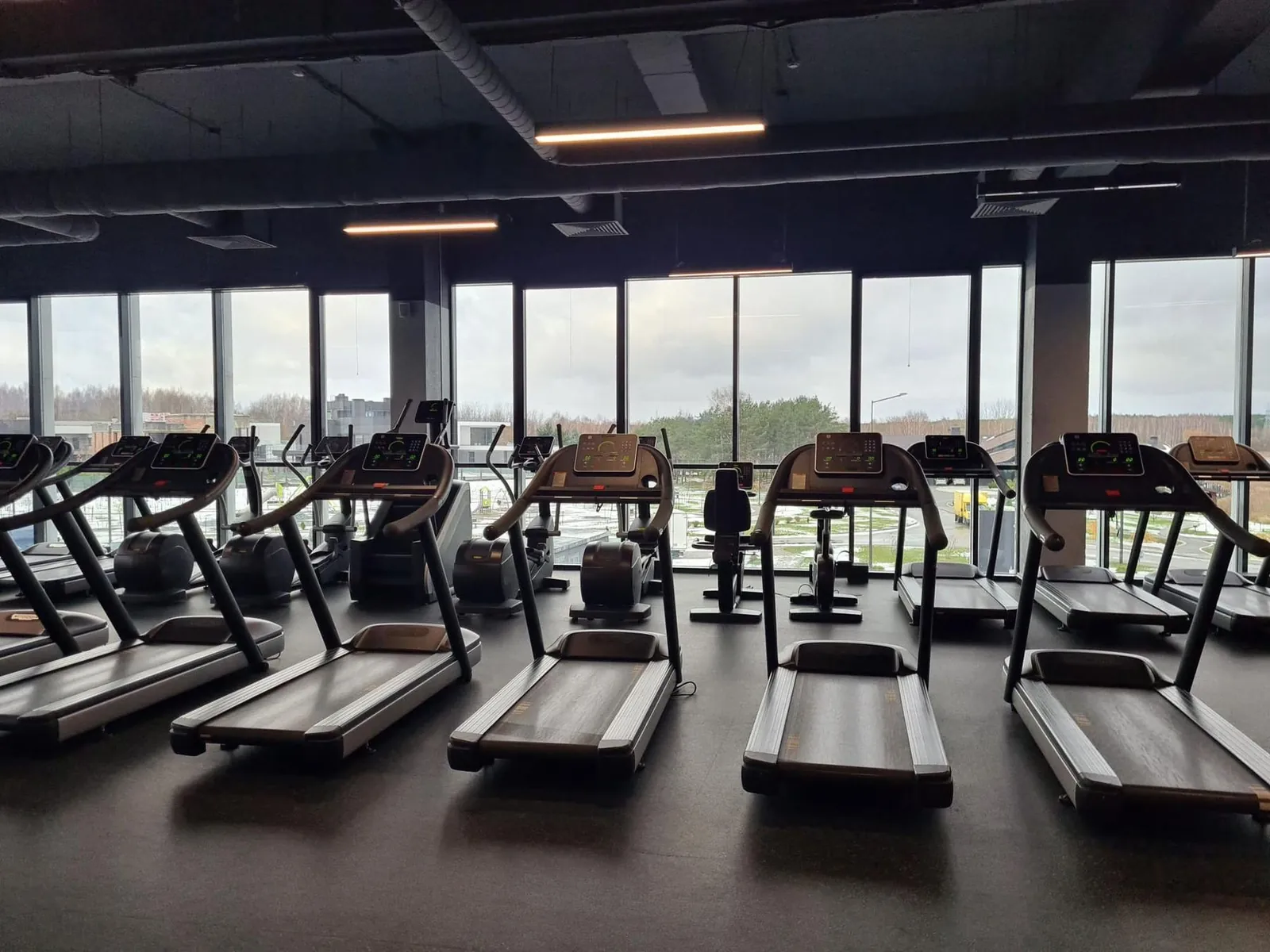
Watch people train in any building gym and you will see two extremes. Some rush from set to set, convinced that short rests burn more fat. Others scroll on their phone for five minutes between every set. Rest time sounds like a small detail, but it changes how much work you can do, and that changes your results.
I’m Gawhar Ahmad, licensed pharmacist and head coach at Being Fit. When clients ask what separates good coaching from average coaching, details like this are part of the answer, and our guide to choosing the best personal trainer in Dubai covers the rest. Our coaches train clients across Dubai, including in towers and building gyms in Downtown Dubai. Here is what the research says about rest between sets.
Key takeaways
- For muscle growth, resting longer than about 60 seconds between sets appears slightly better than very short rest.
- A 2024 meta-analysis found little extra benefit from resting longer than about 90 seconds for muscle size.
- For heavy strength work, the ACSM recommends 3 to 5 minutes of rest between sets.
- In one trial, 3-minute rests led to greater strength and muscle gains than 1-minute rests in trained men.
- To save time, pair exercises for different muscles rather than cutting rest on your main lifts.
Why rest matters at all
Each hard set fatigues the muscles you are using. If you start the next set before you have recovered enough, you complete fewer reps or have to lift a lighter weight. Over a session, that means less total work, and the amount of quality work you do over weeks is one of the main drivers of strength and muscle gain. Our guide to progressive overload explains why that matters.
What the studies show
In 2016, Brad Schoenfeld and colleagues randomly assigned 21 trained young men to the same eight-week programme, with either 1-minute or 3-minute rests between sets. The 3-minute group gained more strength in the squat and bench press and more muscle thickness in the front of the thigh, published in the Journal of Strength and Conditioning Research.
A 2017 systematic review by Grgic and colleagues concluded that both short and long rests can build muscle, with a possible advantage for longer rests in trained people, while noting that there were few studies. A larger 2024 Bayesian meta-analysis by Singer and colleagues, covering nine studies, found a small benefit for resting more than 60 seconds, but no clear extra benefit beyond about 90 seconds for muscle size.
The American College of Sports Medicine position stand on resistance training gives practical ranges: 3 to 5 minutes for heavy strength and power work, 1 to 2 minutes for moderate loads aimed at muscle growth, and under 90 seconds for light, high-rep muscular endurance work.
| Goal | Typical rest | What it looks like |
|---|---|---|
| Heavy strength (big lifts, low reps) | 3 to 5 minutes | Squats, deadlifts, presses in the 1 to 6 rep range |
| Muscle growth | About 1 to 3 minutes | Most sets in the 6 to 12 rep range |
| Smaller exercises | About 1 to 2 minutes | Arm, shoulder and calf work |
| Muscular endurance | Under 90 seconds | Light loads, more than 15 reps |
What about fat loss? Do shorter rests burn more?
Shorter rests make a session feel harder and raise your heart rate, but fat loss mostly comes from a consistent calorie deficit while you keep or build muscle. Cutting rest so much that your strength drops can work against that, because the muscle you keep matters. If you want more conditioning, add it deliberately as a finisher or a separate session, rather than rushing your main lifts. Our comparison of HIIT and strength training for fat loss explains the balance.
How to save time without losing results
If you have a demanding job, time matters. These are the methods our coaches use:
- Pair exercises for different muscles. Do a set of rows, rest briefly, then a set of presses. Each muscle still gets a long rest, but the session is shorter.
- Keep long rests for the big lifts. Squats and deadlifts get the full rest; smaller exercises can be grouped closer together.
- Use a timer. Most people underestimate how long they have rested. A simple timer stops both rushing and drifting.
- Rest actively. Use the rest for light mobility for a different area, not your phone.
- Do less, better. On a busy week, fewer hard sets with proper rest beat many rushed ones. Our article on the minimum effective dose of training shows how.
Good technique matters as much as rest. If a set is falling apart, longer rest will not fix it; our guide to squat and hip hinge technique covers what to look for.
Why supervision helps here
Rest time is one of those details that slides when you train alone. A small study by Mazzetti and colleagues found that men who trained with direct supervision from a personal trainer increased their training loads faster and gained more strength over 12 weeks than men following the same programme alone. A coach keeps rest, load and technique on track so that every set counts. Every Being Fit programme starts with a free trial and a medical-based assessment led by me.
Downtown Dubai
In Downtown Dubai, clients train in their apartment or building gym, at Burj Khalifa, or at our partner gym, Train SF in The Dubai Mall. If you travel or prefer to train on your own schedule, our online coaching is also available. Our home personal trainer in Downtown Dubai page has local details, and for a dedicated coach, see our VIP personal trainer in Downtown Dubai page. The full range is Essential (3 sessions a week), Signature (4 a week), Premium (up to 5 a week, at your home or building gym, with priority scheduling) and VIP (5 to 6 private sessions a week), each with a customised nutrition plan. Pricing for every package is on our packages page, or WhatsApp for pricing on 058 572 2691.
Want a programme where every detail is planned? Read our guide to the best personal trainer in Dubai to see what good coaching looks like. Our Health & Fitness professional-led team is here to help: call 058 572 2691, WhatsApp us on 058 572 2691, email info@beingfit.ae or book your free trial and assessment. Every way to reach us is on our contact page.
You can also start online coaching, train in the Being Fit app, or browse our guides on the shop page.
Frequently asked questions
How long should I rest between sets to build muscle?
Research suggests resting more than about 60 seconds, with little extra benefit beyond about 90 seconds to 2 minutes for most exercises. Big lifts may need longer.
How long should I rest for strength?
For heavy strength work, the ACSM recommends 3 to 5 minutes between sets.
Do short rests burn more fat?
They raise your heart rate, but fat loss mostly depends on your calorie deficit. Keeping your strength by resting properly is usually the better choice.
How can I make my workouts shorter?
Pair exercises for different muscles, keep full rest for the big lifts, and use a timer.
How do I see pricing?
Pricing for every package is on our Packages page, or WhatsApp us on 058 572 2691. Your first session is a free trial and assessment.
Sources
- Schoenfeld BJ et al. Longer interset rest periods enhance muscle strength and hypertrophy in resistance-trained men. J Strength Cond Res 2016;30(7):1805-1812
- Grgic J et al. The effects of short versus long inter-set rest intervals in resistance training on measures of muscle hypertrophy: a systematic review. Eur J Sport Sci 2017;17(8):983-993
- Singer A et al. Give it a rest: a systematic review with Bayesian meta-analysis on the effect of inter-set rest interval duration on muscle hypertrophy. Front Sports Act Living 2024;6:1429789
- American College of Sports Medicine position stand. Progression models in resistance training for healthy adults. Med Sci Sports Exerc 2009;41(3):687-708
- Mazzetti SA et al. The influence of direct supervision of resistance training on strength performance. Med Sci Sports Exerc 2000;32(6):1175-1184
This article is general information, not medical advice. If you have a medical condition, are pregnant or take regular medicines, speak to your doctor before starting a new exercise programme.