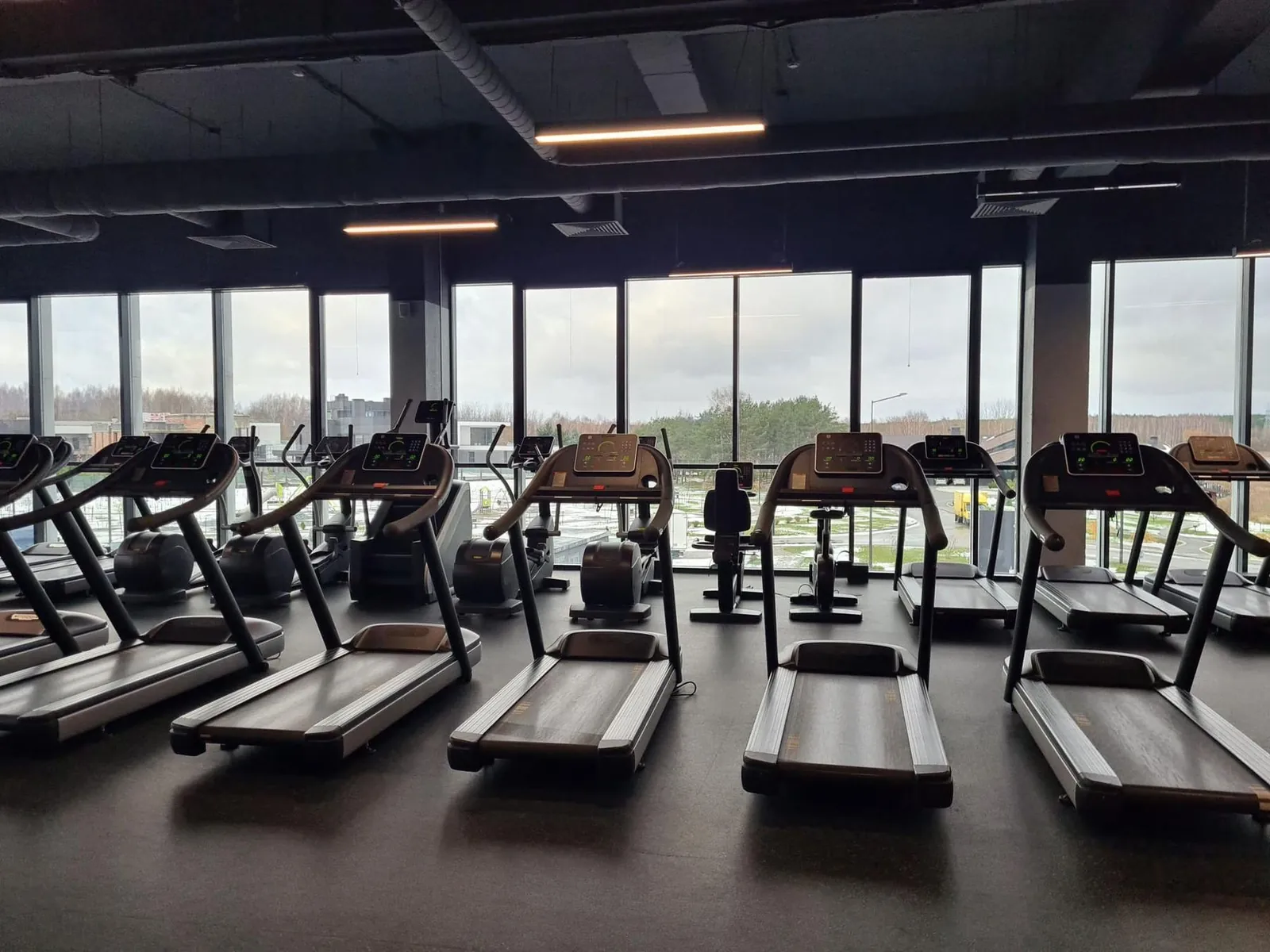
The warm-up is the part of a session most people skip when they train alone. They walk in, load the bar and start their first heavy set cold, or they spend ten minutes holding static stretches that do little for the lift ahead. A good warm-up is short, specific and one of the easiest ways to make every session better.
I’m Gawhar Ahmad, licensed pharmacist and head coach at Being Fit. In our personal training in Dubai, every session starts with a planned warm-up, whether we are training you at home, in your building gym or at a partner gym. Our coaches train clients across Dubai, including in towers and building gyms across Dubai Marina. Here is what the evidence says and the routine we use.
Key takeaways
- A meta-analysis of 32 high-quality studies found that warming up improved performance in 79% of the outcomes measured.
- Long static stretches straight before lifting can reduce performance; short ones (under about 90 seconds in total per muscle) are unlikely to.
- The best warm-up is light general activity, then dynamic movements, then lighter sets of the exercise you are about to do.
- Structured warm-up programmes have reduced injuries in sport, for example in young footballers.
- Ten minutes is usually enough. The warm-up should prepare you, not tire you.
Does warming up actually make a difference?
Yes. In 2010, Fradkin and colleagues pooled 32 high-quality studies in a systematic review and meta-analysis in the Journal of Strength and Conditioning Research. Warming up improved performance in 79% of the outcomes examined, and they found little evidence that warming up is harmful.
There is also evidence on injuries. In a cluster randomised trial published in the BMJ, Soligard and colleagues followed 1,892 young female footballers for a season. Teams that used a structured warm-up programme of strength, balance and movement control had a lower risk of injuries overall, overuse injuries and severe injuries. That study was in football, not the gym, but it supports the principle: a planned warm-up is time well spent.
Static or dynamic stretching before lifting?
This is where many people go wrong. A review by Behm and Chaouachi in the European Journal of Applied Physiology looked at the acute effects of stretching on performance. Long static stretches held before an activity have been linked with short-term drops in strength and power in many studies. Short static stretches, under about 90 seconds in total and below the point of discomfort, are much less likely to cause a problem. Dynamic stretching, moving through a range of motion with control, has either no negative effect or may help.
Their practical recommendation is a useful template: light aerobic activity first, then large-range dynamic movements, then activity specific to what you are about to do. Static stretching still has a place for flexibility, but it fits better at the end of a session or on its own. Our stretching and mobility coaching guide covers that side.
The warm-up our coaches use
This takes about ten minutes and works for most strength sessions. Your coach adjusts it to your joints, your history and the day’s main lifts.
- Raise your temperature (3 to 5 minutes). Easy cycling, brisk walking, a rower, light skipping or simply marching on the spot, which is how the NHS warm-up routine starts. You should feel warm and breathe a little faster, but still be able to talk.
- Move the joints you will use (3 to 4 minutes). Leg swings, hip openers, bodyweight squats to a comfortable depth, hip hinges with a dowel, arm circles and band pull-aparts. Each movement for 8 to 10 controlled reps.
- Switch on the key muscles (1 to 2 minutes). For example glute bridges and side-lying leg raises before squats, or band rows before pressing.
- Ramp-up sets of your first exercise. Start light and build towards your working weight over two to four sets of falling reps. This is where you rehearse technique. Our guide to squat and hip hinge technique shows what we look for.
| Part | Example | Time |
|---|---|---|
| General | Bike, rower, brisk walk or light skipping | 3 to 5 min |
| Dynamic mobility | Leg swings, hip openers, bodyweight squats, arm circles | 3 to 4 min |
| Activation | Glute bridges, band pull-aparts, band rows | 1 to 2 min |
| Ramp-up sets | Lighter sets of your first lift, building towards working weight | 2 to 4 sets |
Common warm-up mistakes
- Skipping it on busy days. If time is short, cut a set from the end, not the warm-up.
- Making it a workout. A hard circuit before lifting leaves you tired for the sets that matter.
- Only stretching. Long static holds without movement do not prepare you well for heavy lifts.
- Jumping straight to the working weight. Ramp-up sets are part of the warm-up and the best time to fix technique.
- Ignoring the day. After a long flight, a poor night or a long day at a desk, you may need a few extra minutes.
Sore from your last session? Light movement usually helps, but our article on muscle soreness after personal training explains when to ease off. If you are planning your week, the NHS recommends strength activities on at least two days a week.
Why this matters more with a coach
A good coach uses the warm-up to check how you are moving that day. Stiff hips, a sore shoulder or a poor night’s sleep all show up in the first few minutes, and the session can be adjusted before the heavy work starts. Every Being Fit programme starts with a free trial and a medical-based assessment led by me, so we know your history before your first warm-up.
Training in Dubai Marina
In Dubai Marina, most clients train in their apartment or building gym, and a clear mat-sized space is enough for a full warm-up. In the cooler months, walks and mobility by the water are an easy way to add movement. If you travel or prefer to train on your own schedule, our online coaching is also available. Our home personal trainer in Dubai Marina page has local details, and women who prefer a female coach can see our female personal trainer in Dubai Marina page. The full range is Essential (3 sessions a week), Signature (4 a week), Premium (up to 5 a week, at your home or building gym, with priority scheduling) and VIP (5 to 6 private sessions a week), each with a customised nutrition plan. Pricing for every package is on our packages page, or WhatsApp for pricing on 058 572 2691.
Want every session to start the right way? See how our personal training in Dubai works. Our Health & Fitness professional-led team is here to help: call 058 572 2691, WhatsApp us on 058 572 2691, email info@beingfit.ae or book your free trial and assessment. Every way to reach us is on our contact page.
You can also start online coaching, train in the Being Fit app, or browse our guides on the shop page.
Frequently asked questions
How long should a warm-up be before lifting weights?
Around ten minutes is usually enough: a few minutes of light cardio, a few minutes of dynamic mobility, then lighter ramp-up sets of your first exercise.
Is static stretching before lifting bad?
Long static stretches can reduce strength and power for a short time. Short holds are unlikely to cause problems, but dynamic movements are a better choice before lifting.
Does warming up prevent injuries?
Structured warm-up programmes have reduced injuries in sport, for example in young footballers. A warm-up also lets you and your coach spot problems early.
Should I warm up differently on a busy day?
Keep the warm-up and cut volume elsewhere. A shorter session with a good warm-up is better than a full session started cold.
How do I see pricing?
Pricing for every package is on our Packages page, or WhatsApp us on 058 572 2691. Your first session is a free trial and assessment.
Sources
- Fradkin AJ, Zazryn TR, Smoliga JM. Effects of warming-up on physical performance: a systematic review with meta-analysis. J Strength Cond Res 2010;24(1):140-148
- Behm DG, Chaouachi A. A review of the acute effects of static and dynamic stretching on performance. Eur J Appl Physiol 2011;111(11):2633-2651
- Soligard T et al. Comprehensive warm-up programme to prevent injuries in young female footballers: cluster randomised controlled trial. BMJ 2008;337:a2469
- NHS: How to warm up before exercising
- NHS: Physical activity guidelines for adults aged 19 to 64
This article is general information, not medical advice. If you have a medical condition, are pregnant or take regular medicines, speak to your doctor before starting a new exercise programme.
Choosing a coach? Read our guide to the best personal trainer in Dubai: seven honest checks before you book.